
What to Expect, How to Prepare and What to Ask Your Vaidya
Vaidya Mitra Editorial Team
03-11-2026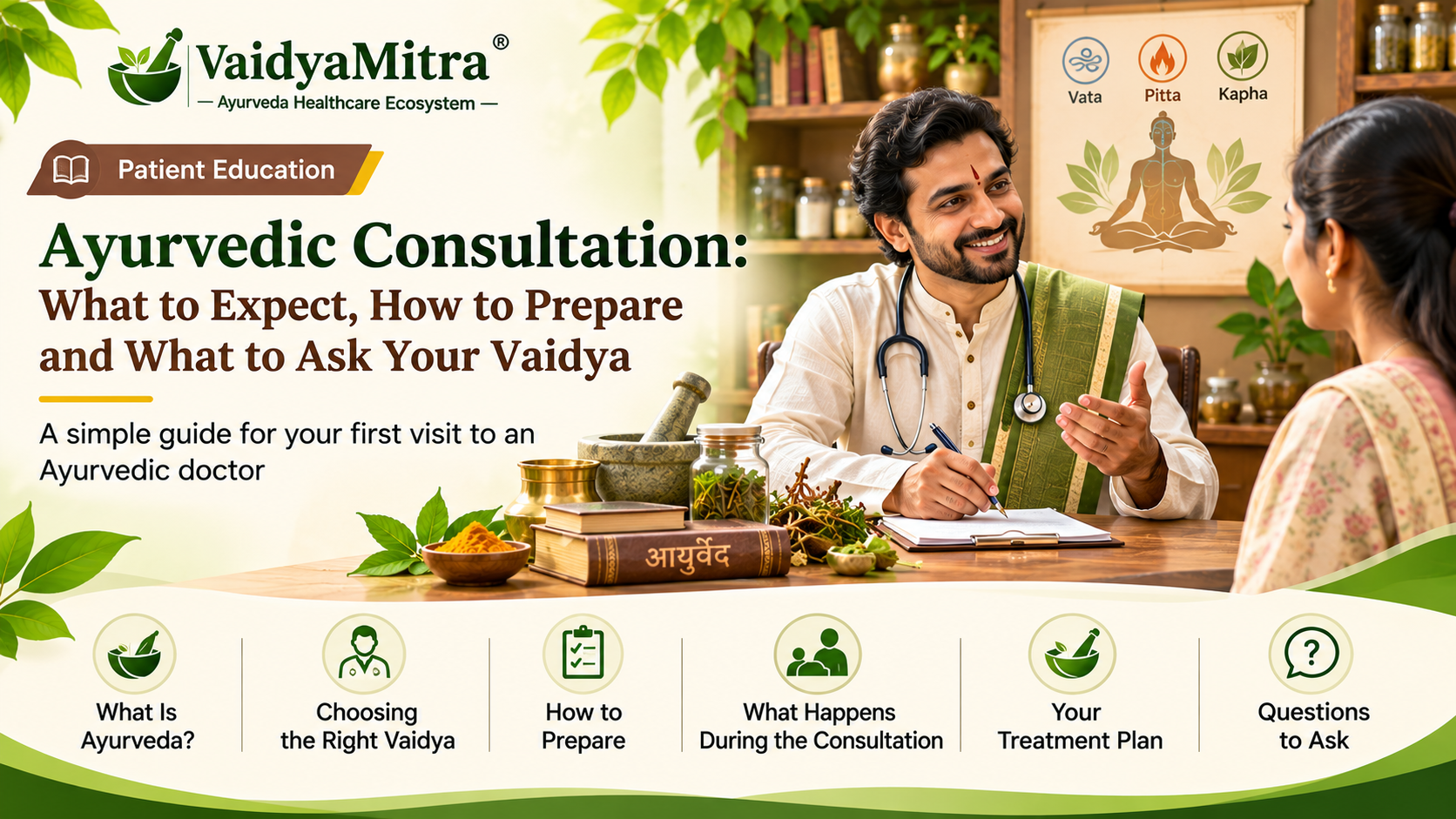
Thinking about visiting an Ayurvedic doctor for the first time? This simple guide explains how to choose a Vaidya, how to prepare, what happens during the consultation, and which questions to ask.
If you are new to Ayurveda, your first visit to a Vaidya (Ayurvedic doctor) can feel unfamiliar. You may wonder: What will the doctor ask me? Do I need to stop my current medicines? How long will the treatment take?
This guide answers these questions in simple language, so you can walk into your first consultation prepared and confident.
What Is Ayurveda? A Quick Beginner's Introduction
Ayurveda is a traditional system of medicine from India. The word comes from Sanskrit: Ayu means life and Veda means knowledge. It looks at health as a balance of body, mind and lifestyle, not only the absence of disease.
A few basic ideas you may hear during your visit:
- Doshas (Vata, Pitta and Kapha): Three functional energies that Ayurveda uses to describe how the body and mind work.
- Prakriti: Your natural constitution, which is considered unique to every person.
- Vikriti: Your current state of imbalance, which may differ from your natural constitution.
- Dinacharya and Ritucharya: Daily and seasonal routines that support health.
You do not need to learn these terms before your visit. Your Vaidya will explain them as needed.
How to Choose an Ayurvedic Doctor
Choosing the right practitioner is the most important step. Look for these points:
- Qualification: In India, a qualified Ayurvedic doctor usually holds a BAMS degree or higher (such as MD/MS in Ayurveda) from a recognized institution.
- Registration: Ask whether the doctor is registered with the relevant State Ayurveda Council or the National Commission for Indian System of Medicine (NCISM).
- Experience: Check how long the doctor has practiced and whether they have experience with your type of health concern.
- Clear communication: A good Vaidya listens carefully, explains the plan and answers your questions without hurry.
- Honest expectations: Be careful with anyone who promises a guaranteed or overnight cure. Ayurveda, like any medical approach, works differently for different people.
- Clean, professional clinic: Look for proper hygiene, organized records and clear information about fees.
You can also read patient reviews, ask family and friends for recommendations, and check whether the clinic offers online booking and digital records for easier follow-ups.
How to Prepare for Your Ayurvedic Consultation
A little preparation helps your Vaidya understand you better and saves time during the visit.
Bring with you:
- Previous medical reports, test results and prescriptions
- A list of all medicines and supplements you currently take, including any modern (allopathic) medicines
- Notes on your symptoms: when they started, what makes them better or worse
- Details about allergies or past surgeries
Think about your daily routine:
- What time do you wake up and sleep?
- What do you usually eat, and at what times?
- How is your digestion, energy level and stress?
- Do you exercise, and how often?
On the day of the visit:
- Wear comfortable clothing, as the doctor may examine your pulse, tongue or abdomen.
- Avoid taking new herbs or supplements on your own just before the visit, unless advised.
- Arrive a few minutes early to complete registration.
What Happens During an Ayurvedic Consultation?
Every clinic works a little differently, but most consultations follow a similar flow.
1. Detailed conversation. The Vaidya asks about your main complaint, medical history, family history, food habits, sleep, bowel and urinary habits, stress, and lifestyle. This is usually longer than a typical quick check-up.
2. Examination. Traditional methods may include checking the pulse (Nadi Pariksha), looking at the tongue, eyes, skin and nails, and a general physical examination. Some doctors may also ask for modern laboratory tests when needed.
3. Understanding your constitution. The Vaidya may assess your Prakriti and current Vikriti to understand your overall pattern.
4. Diagnosis and explanation. You should receive a clear explanation of what the doctor believes is happening and why.
5. Treatment plan. The plan is personalized and may include diet suggestions, lifestyle changes, herbal medicines, and in some cases therapies such as Abhyanga (oil massage), Shirodhara or Panchakarma.
6. Follow-up schedule. Your Vaidya will tell you when to return for review and what to watch for.
Understanding Your Ayurvedic Treatment Plan
An Ayurvedic treatment plan is usually more than just medicines. It may include:
- Aahar (diet): Foods to favor or avoid, and meal timings.
- Vihar (lifestyle): Sleep, exercise, yoga, breathing practices and daily routines.
- Aushadhi (medicines): Herbal formulations such as churna (powders), kashaya (decoctions), tablets or oils.
- Therapies: Treatments done at the clinic or a therapy centre, when appropriate.
Ask your Vaidya to write down the plan clearly, including how to take each medicine, for how long, and what to do if you feel unwell.
Be patient and consistent. Many Ayurvedic recommendations focus on gradual, long-term improvement. Following diet and routine advice as suggested is an important part of the process.
10 Questions to Ask Your Vaidya
Do not hesitate to ask questions. A good practitioner will welcome them.
- What do you think is causing my problem?
- What is my Prakriti, and how does it relate to my condition?
- What does my treatment plan include, and why?
- How long should I follow this plan?
- What foods and habits should I avoid?
- Are there any possible side effects or interactions with my current medicines?
- Can I continue my modern medicines while taking Ayurvedic treatment?
- When should I expect to see changes?
- When is my next follow-up visit?
- Which symptoms mean I should contact you or seek urgent medical care?
Ayurveda Myths and Facts
Myth: Ayurvedic medicines are always completely safe because they are natural. Fact: Natural does not automatically mean risk-free. Herbs can cause side effects or interact with other medicines. Always take them under the guidance of a qualified practitioner and quality-tested products.
Myth: Ayurveda gives quick fixes. Fact: Ayurveda generally focuses on addressing the underlying pattern, which often takes time and lifestyle change.
Myth: You must stop all modern medicines to take Ayurveda. Fact: Never stop prescribed medicines without medical advice. Tell all your doctors about everything you are taking.
Myth: One treatment works for everyone with the same disease. Fact: Ayurveda emphasizes individualized care, so two people with similar symptoms may receive different plans.
Myth: Ayurveda is only about herbs. Fact: Diet, daily routine, sleep, exercise, mental wellbeing and therapies are equally important parts of Ayurveda.