
Understanding Vamana, Virechana, Basti and Nasya Through Clinical Documentation
VaidyaMitra Team
04-11-2026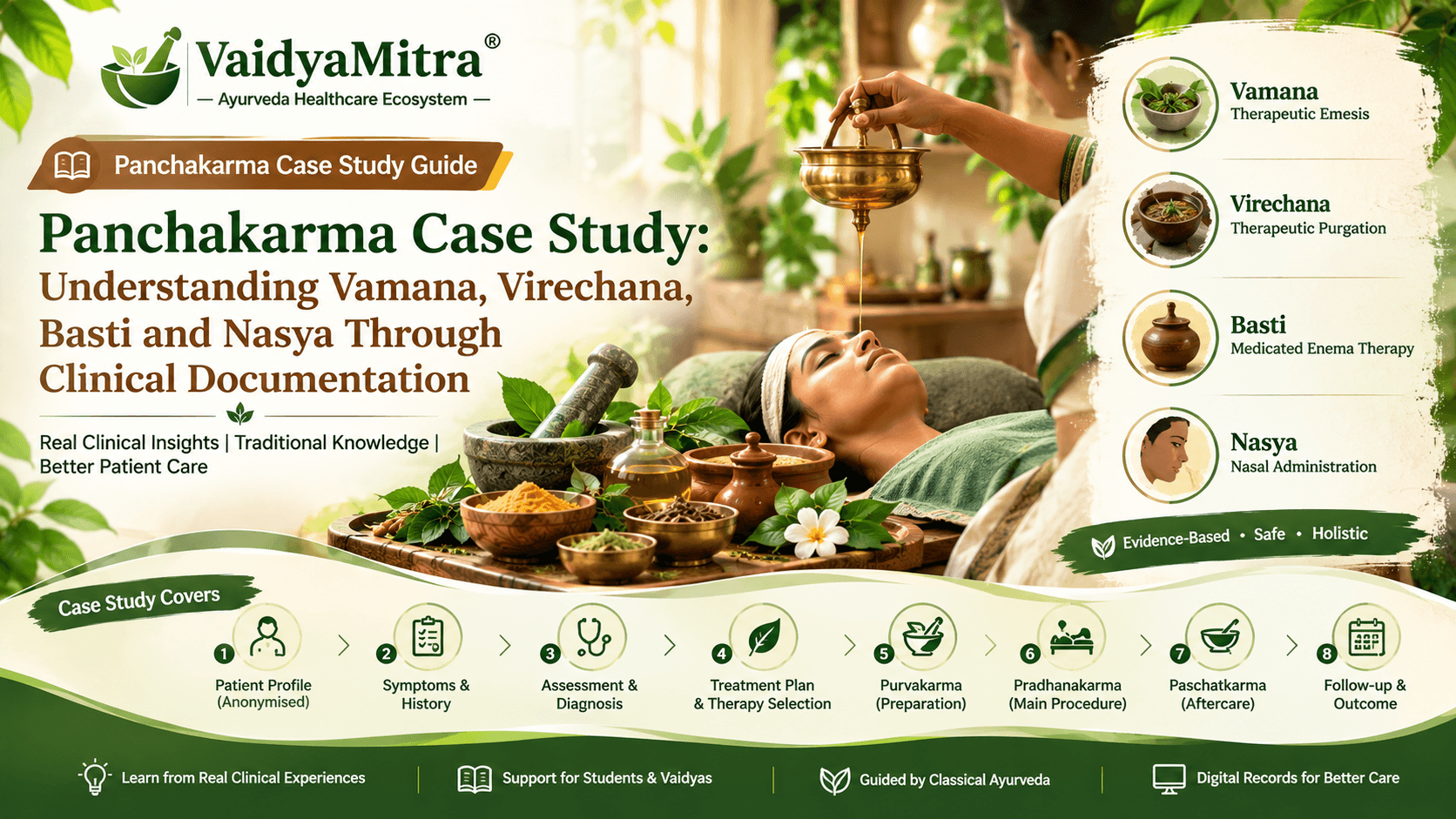
Learn how the five Panchakarma therapies are planned, performed and documented in clinical practice, with a structured case study format covering preparation, procedure, aftercare and follow-up.
Panchakarma Case Study Guide: Understanding Vamana, Virechana, Basti and Nasya Through Clinical Documentation
Panchakarma is one of the most discussed treatment approaches in Ayurveda. For students, Vaidyas and patients, the best way to understand it is through a well-documented case study. A good case study shows the full journey: why a therapy was chosen, how the patient was prepared, what was done, and how follow-up was managed.
Note: The case study format below is an illustrative educational template. It is not a record of a real patient and not medical advice. Always consult a qualified Vaidya before undergoing any therapy.
What Is Panchakarma?
Panchakarma refers to a group of Ayurvedic purification and therapeutic procedures. The classical therapies are:
- Vamana: therapeutic emesisa
- Virechana: therapeutic purgation
- Basti: medicated enema therapy
- Nasya: administration of medicine through the nasal route
- Raktamokshana: bloodletting, included in some classical descriptions
Each therapy is selected after assessing the patient’s condition, strength, age, season and constitution (Prakriti). It is carried out only under the guidance of a qualified Vaidya.
Why Case Studies Matter in Ayurveda
- They show how classical principles are applied to a real clinical situation.
- They help students learn the reasoning behind therapy selection.
- They help Vaidyas share experience and compare approaches.
- They create a structured record that supports learning and research.
The Three Stages of Panchakarma
- Purvakarma (preparation): Deepana-Pachana, Snehana (oleation) and Swedana (sudation) prepare the body.
- Pradhanakarma (main procedure): The selected therapy, such as Vamana, Virechana, Basti or Nasya, is performed.
- Paschatkarma (aftercare): Dietary regimen (Samsarjana Krama), lifestyle guidance and follow-up care.
Structure of a Panchakarma Case Study
- Patient profile (anonymised): Age, gender, occupation, lifestyle. Never include name, address or contact details.
- Presenting complaints: Main symptoms and their duration.
- History: Past illness, family history, diet, sleep, digestion and habits.
- Examination: Prakriti, Agni, Koshtha, Bala and clinical observations.
- Diagnosis: The Vaidya’s assessment in Ayurvedic terms.
- Treatment plan: Selected therapy, medicines and duration.
- Purvakarma details: Preparation steps and how the patient responded.
- Pradhanakarma details: Procedure, observations and any precautions taken.
- Paschatkarma details: Diet, rest and lifestyle advice after therapy.
- Follow-up and outcome: Progress noted at each visit, described honestly and without exaggeration.
- Discussion: What the case teaches, and its limitations.
Quick Reference: Therapy and Documentation Points
- Vamana: Document preparation, number of episodes, patient comfort and post-therapy diet.
- Virechana: Document the medicine used, number of bowel movements, and signs of proper purification.
- Basti: Document the type of Basti, the schedule, retention and the patient’s response.
- Nasya: Document the type of Nasya, the dose, the position and the post-procedure care.
Best Practices for Writing a Responsible Case Study
- Always take patient consent before documenting or sharing a case.
- Remove all personally identifying information.
- Record observations as they were, including cases with limited improvement.
- Avoid words like “guaranteed cure” or “100% result”.
- Use Ayurvedic terms with clear explanations so students can follow.
Safety Note
Panchakarma is not suitable for everyone. Age, pregnancy, weakness, certain medical conditions and medications can all affect whether a therapy is appropriate. A proper assessment by a qualified Vaidya is essential.
How Digital Records Help
Well-organized patient records make case studies much easier to build. When consultations, prescriptions, therapy sessions and follow-ups are stored in one place, a Vaidya can review the full treatment history in minutes. Vaidya Mitra helps clinics maintain structured records and share learning with the Ayurveda community.
Read more in our Ayurveda Case Studies section and explore Patient Management.
Conclusion
A strong Panchakarma case study connects classical knowledge with real clinical practice. By documenting preparation, procedure, aftercare and follow-up carefully, Vaidyas can build knowledge that helps students, colleagues and the wider Ayurveda community.
Want to document and share your clinical experience?
Explore how Vaidya Mitra helps Vaidyas manage patient records, therapy schedules and professional learning in one place.