
Rasayana and Rejuvenation Therapy Case Study Guide: Planning, Preparation, Aftercare and Follow-up
VaidyaMitra Team
04-11-2026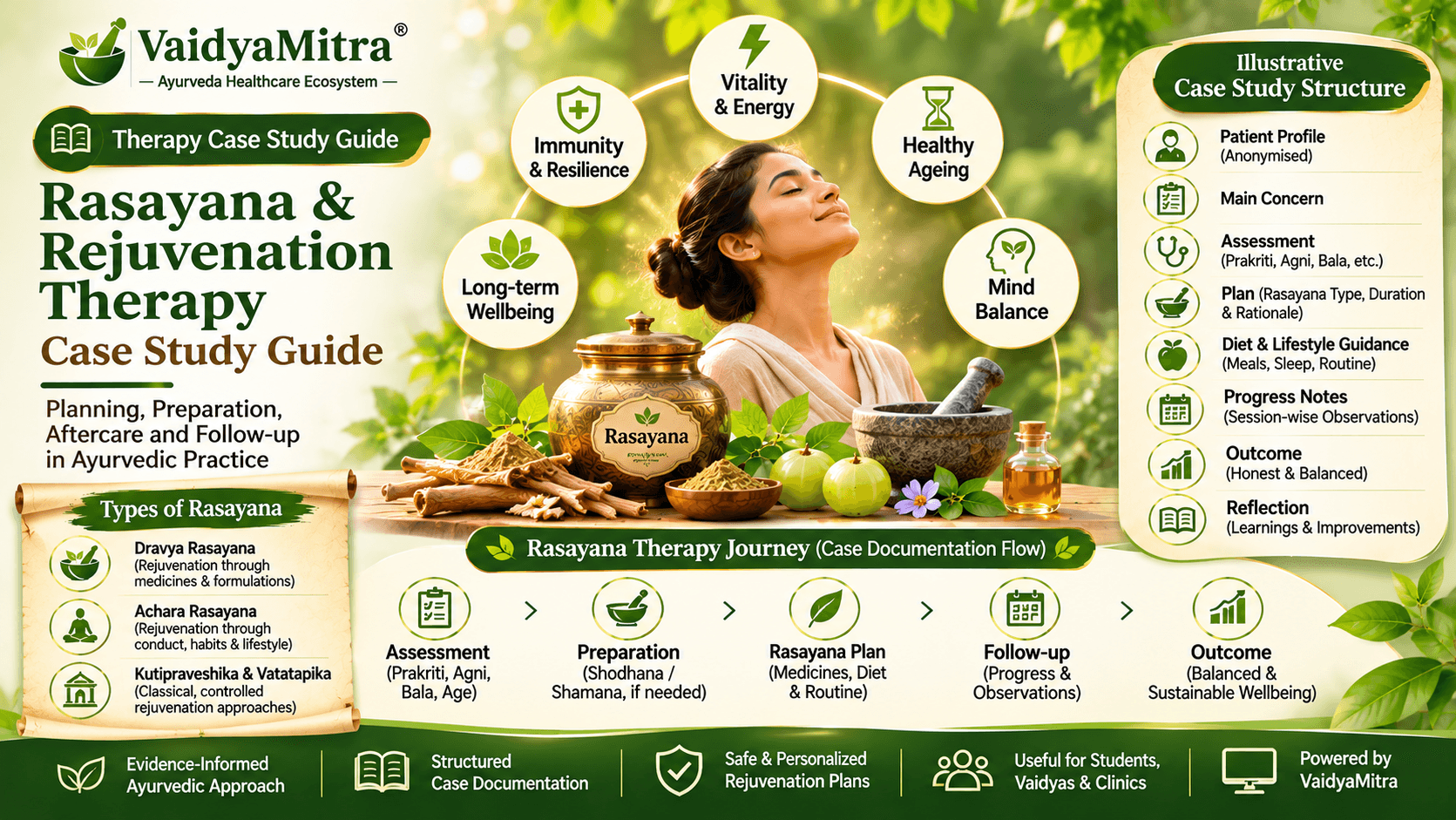
An educational case study guide to Rasayana and Ayurvedic rejuvenation therapies, explaining how a Vaidya assesses a patient, plans a rejuvenation programme, gives aftercare advice and documents follow-up.
Rasayana and Rejuvenation Therapy Case Study Guide: Planning, Preparation, Aftercare and Follow-up
Rasayana is the branch of Ayurveda focused on rejuvenation, vitality and long-term wellbeing. Unlike therapies aimed at a specific complaint, Rasayana looks at the person as a whole: digestion, strength, sleep, mind, lifestyle and age. This guide explains how a Rasayana plan is designed and documented in a case study format.
Note: The case study format below is an illustrative educational template. It is not a record of a real patient and not medical advice. Rasayana should be planned only by a qualified Vaidya.
What Is Rasayana?
Rasayana refers to approaches that aim to support health, resilience and healthy ageing. These may include:
- Specific herbal formulations chosen by the Vaidya
- Diet guidance suited to the person
- Daily and seasonal routines
- Sleep, rest and stress management advice
- Rejuvenation therapies performed at a therapy centre
Types of Rasayana Approaches
- Dravya Rasayana: Rejuvenation through medicines and formulations.
- Achara Rasayana: Rejuvenation through conduct, habits and lifestyle.
- Kutipraveshika and Vatatapika: Classical descriptions of Rasayana performed under controlled conditions, mainly of academic interest today.
Preparing for Rasayana
Classical texts often describe cleansing or preparation before Rasayana. A Vaidya typically:
- Assesses Prakriti, Agni, Bala and age
- Reviews current health conditions and medications
- Decides whether Shodhana or Shamana preparation is needed
- Explains the plan, duration and expected experience
- Advises on diet, sleep and routine
Aftercare and Follow-up
- Follow the diet and routine given by the Vaidya
- Maintain regular sleep and meal timings
- Avoid self-medication with additional herbs or supplements
- Attend follow-up visits as advised
- Report any discomfort or change promptly
Illustrative Case Study Structure
- Patient profile (anonymised): Age group, gender, lifestyle.
- Main concern: For example, low energy, stress or recovery after a long illness.
- Assessment: Prakriti, Agni, Bala and relevant observations.
- Plan: Rasayana type, preparation, duration and reasons for the choice.
- Diet and lifestyle guidance: Meals, sleep, activity and routine.
- Progress notes: Observations at each follow-up.
- Outcome: Described honestly, including limitations.
- Reflection: What the case teaches and what could be improved.
Responsible Documentation Tips
- Take consent before documenting or sharing a case.
- Remove all personal identifiers.
- Avoid claims such as “anti-ageing guarantee” or “complete cure”.
- Record patient-reported changes in their own words.
- Explain Ayurvedic terms for new readers.
Who Should Be Careful?
Pregnancy, acute illness, chronic conditions and regular medications may affect whether a Rasayana is suitable. Always share your full health history with the Vaidya.
How Digital Records Help
Rasayana programmes run over weeks or months. Storing assessments, formulations, diet advice and follow-up notes in one place helps a Vaidya see progress across visits. Vaidya Mitra helps clinics maintain structured patient records and treatment history.
Explore our Ayurveda Case Studies and Patient Management.
Conclusion
Rasayana is about long-term balance, not quick results. Careful, honest documentation helps students and Vaidyas learn how rejuvenation plans are built and reviewed.
Want to document your clinical experience?
Discover how Vaidya Mitra helps Vaidyas keep structured records and share learning with the Ayurveda community.