
Food by Prakriti, Season and Digestion
VaidyaMitra Team
03-11-2026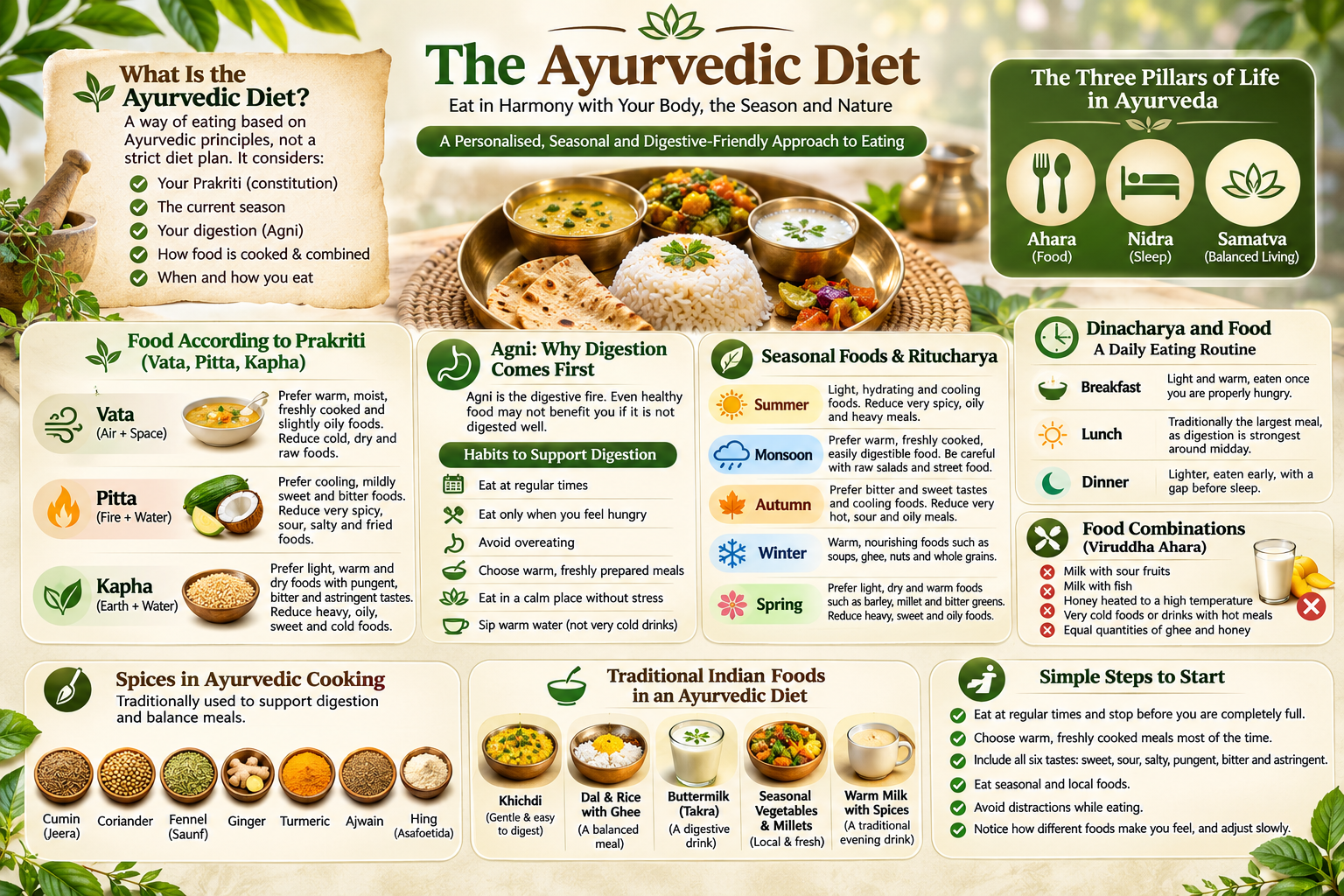
What you eat matters in Ayurveda, and so do when, how and with what you eat it. Learn how Prakriti, the seasons, digestion (Agni), spices and food combinations shape the Ayurvedic diet, and how to start with simple daily habits.
Ayurveda treats food as one of the three pillars of life, along with sleep and balanced living. Classical texts place great importance on ahara, the science of food. The Ayurvedic approach is not a fixed list of good and bad foods. It looks at the person, the season, the digestion and the way food is prepared and eaten.
This guide explains the core ideas of the Ayurvedic diet in simple language, so you can understand the principles and apply them with care.
What Is the Ayurvedic Diet?
The Ayurvedic diet is a way of eating based on Ayurvedic principles rather than a strict diet plan. It asks questions such as:
- What is your Prakriti (natural constitution)?
- What is the current season?
- How strong is your digestion?
- How is the food cooked, and what is it combined with?
- When and how are you eating?
Because the answers differ from person to person, Ayurvedic food advice is personal. A food that suits one person at one time of year may not suit another.
Food According to Prakriti: Vata, Pitta and Kapha
Ayurveda describes three doshas, Vata, Pitta and Kapha. Every person has a unique balance of them, called Prakriti. Food choices are traditionally matched to this balance.
Vata (air and space). Vata types are traditionally advised to favour warm, moist, freshly cooked and slightly oily foods such as soups, stews, cooked grains and ghee. Cold, dry and raw foods are usually reduced.
Pitta (fire and water). Pitta types are traditionally advised to favour cooling, mildly sweet and bitter foods such as rice, cooked vegetables, gourds and coconut. Very spicy, sour, salty and fried foods are usually reduced.
Kapha (earth and water). Kapha types are traditionally advised to favour light, warm and dry foods with pungent, bitter and astringent tastes, such as barley, millet, legumes and leafy greens. Heavy, oily, sweet and cold foods are usually reduced.
These are general traditional guidelines, not a diagnosis. An accurate Prakriti assessment is best done by a qualified Vaidya.
Agni: Why Digestion Comes First
In Ayurveda, digestion is described through Agni, the digestive fire. The idea is simple: even healthy food may not benefit you if it is not digested well. Traditional texts describe a strong, regular appetite and comfortable digestion as signs of balanced Agni.
Habits traditionally recommended to support digestion include:
- Eating at regular times
- Eating only when you feel hungry
- Avoiding overeating and leaving some room in the stomach
- Choosing warm, freshly prepared meals
- Eating in a calm place without screens or stress
- Sipping warm water rather than very cold drinks with meals
Seasonal Foods and Ritucharya
Ritucharya is the Ayurvedic idea of adjusting lifestyle and food to the season. The body and the environment change together, so the diet changes too.
- Summer: Prefer light, hydrating and cooling foods such as seasonal fruits, buttermilk and rice. Reduce very spicy, oily and heavy meals.
- Monsoon: Digestion is traditionally considered weaker. Prefer warm, freshly cooked, easily digestible food and be careful with raw salads and street food.
- Autumn: Prefer bitter and sweet tastes and cooling foods. Reduce very hot, sour and oily meals.
- Winter: Appetite is often stronger. Warm, nourishing foods such as soups, ghee, nuts and whole grains are traditionally preferred.
- Spring: Prefer light, dry and warm foods such as barley, millet and bitter greens. Reduce heavy, sweet and oily foods.
Seasonal and local foods are the traditional foundation of this approach.
Dinacharya and Food: A Daily Eating Routine
Dinacharya is the Ayurvedic daily routine, and meal timing is a central part of it.
- Breakfast: Light and warm, eaten once you are properly hungry.
- Lunch: Traditionally the largest meal, as digestion is considered strongest around midday.
- Dinner: Lighter, eaten early, with a gap before sleep.
Many people find that a consistent routine makes meals easier to digest, but the best schedule depends on your work, health and lifestyle.
Spices in Ayurvedic Cooking
Indian kitchens have long used spices to make food flavourful and easier to enjoy. In Ayurvedic cooking, spices are traditionally used to support digestion and balance the qualities of a meal.
- Cumin (jeera): Commonly used in dals, vegetables and buttermilk.
- Coriander: Often used for its cooling quality.
- Fennel (saunf): Often eaten after meals.
- Ginger: Traditionally used to kindle Agni.
- Turmeric: Used daily in Indian cooking.
- Ajwain (carom seeds): Often added to heavier foods and breads.
- Hing (asafoetida): Commonly used with legumes.
These are traditional culinary uses. Spices are not a substitute for medical treatment, and anyone with a health condition or on medication should check with their doctor.
Food Combinations: Viruddha Ahara
Ayurveda describes viruddha ahara, or incompatible food combinations, as pairings that may not suit digestion. Common traditional examples include:
- Milk with sour fruits
- Milk with fish
- Honey heated to a high temperature
- Very cold foods or drinks with hot meals
- Equal quantities of ghee and honey
The traditional view is that such combinations, eaten regularly, may burden digestion. Modern research on these specific combinations is limited, so treat them as traditional guidance and consult a Vaidya if you have concerns.
Traditional Indian Foods in an Ayurvedic Diet
Many everyday Indian foods fit naturally into Ayurvedic eating:
- Khichdi: Rice and moong dal cooked together, traditionally considered gentle and easy to digest.
- Dal and rice with ghee: A balanced everyday meal.
- Buttermilk (takra): Traditionally valued as a digestive drink.
- Seasonal vegetables and millets: Local, fresh and varied.
- Warm milk with spices: A traditional evening drink for many families.
Simple Steps to Start
- Eat at regular times and stop before you are completely full.
- Choose warm, freshly cooked meals most of the time.
- Include all six tastes in your day: sweet, sour, salty, pungent, bitter and astringent.
- Eat seasonal and local foods.
- Avoid distractions while eating.
- Notice how different foods make you feel, and adjust slowly.
When to Consult a Vaidya
Ayurvedic food advice works best when it is personalised. Please consult a qualified Vaidya, and your regular doctor, if you have a medical condition such as diabetes or a digestive disorder, if you are pregnant or breastfeeding, if you take regular medication, or if you want a diet plan based on your own Prakriti and Vikriti. This article is for education only and is not medical advice.
Frequently Asked Questions
What is the Ayurvedic diet? It is an approach to eating based on Ayurvedic principles, which considers your constitution (Prakriti), the season, your digestion and how food is prepared and combined.
Is the Ayurvedic diet vegetarian? Not necessarily. Many people follow it as a vegetarian diet, but classical texts also discuss other foods. What matters is suitability for the person.
What is Agni in Ayurveda? Agni is the digestive fire, a term for the body's capacity to digest and process food.
How do I know my Prakriti? A qualified Vaidya can assess it through consultation and examination. Online quizzes can only give a rough idea.
Can I follow an Ayurvedic diet along with modern medicine? Often yes, but always tell your doctor about any diet changes, especially if you have a health condition or take medication.
Conclusion
The Ayurvedic diet is less about rules and more about awareness. Eat according to your body, the season and your digestion, keep meals simple and fresh, and give attention to how and when you eat. For personal guidance, a conversation with a qualified Vaidya is the best next step.
Are you a Vaidya who wants to share personalised diet plans and keep patient records in one place? Explore how Vaidya Mitra can help you manage your practice digitally.