
Ayurvedic Medicines & Formulations: Types, Uses, Manufacturing and Storage Explained
VaidyaMitra Team
03-11-2026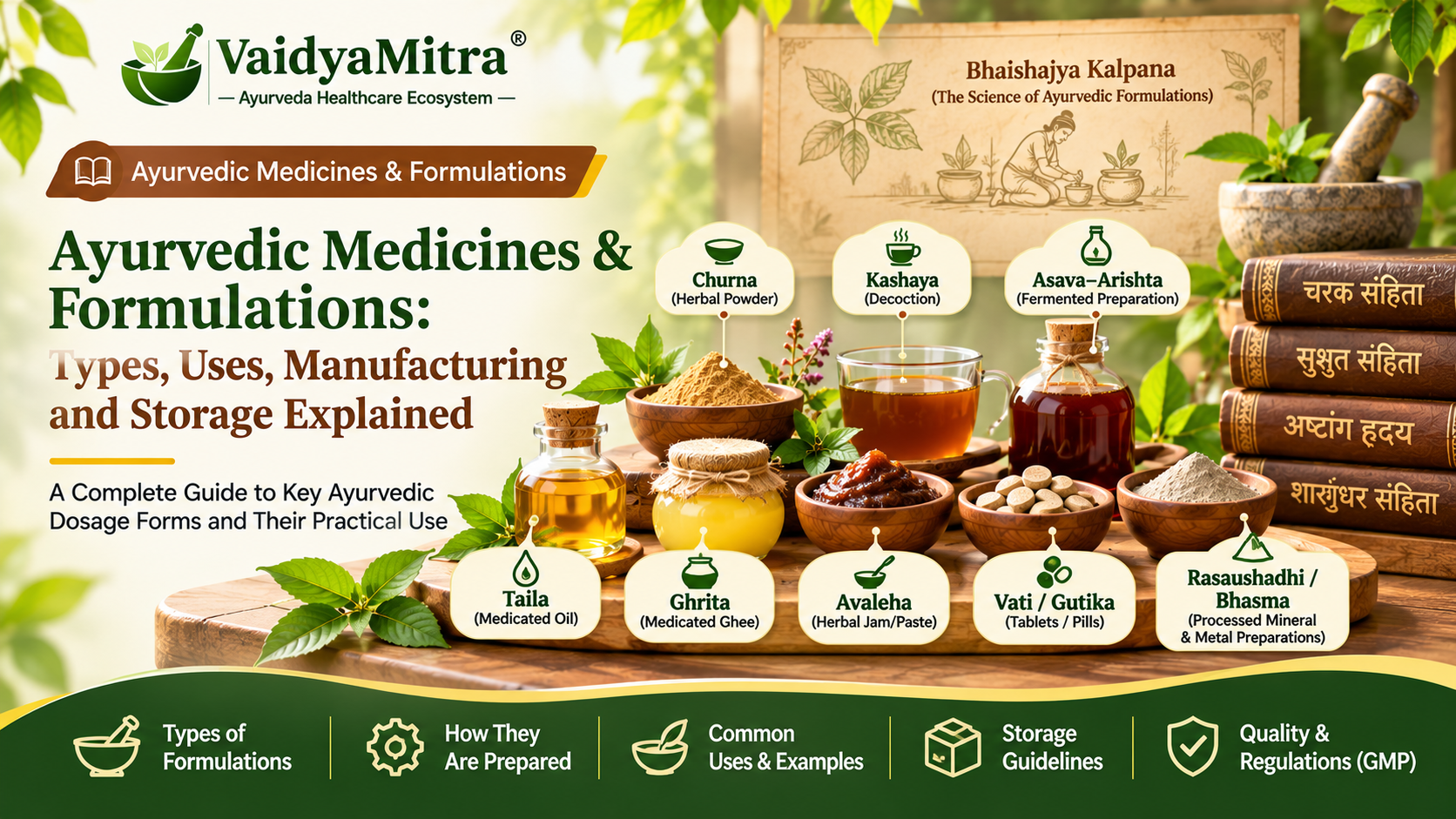
Understand the main forms of Ayurvedic medicine, including churna, kashaya, asava-arishta, taila, ghrita, avaleha and vati, and how they are prepared, used and stored.
Ayurveda does not rely on a single type of medicine. Over centuries, classical texts have described many ways of preparing the same medicinal ingredients, so that the form of the medicine suits the patient, the condition and the purpose of treatment. A powder, a decoction, a medicated oil and a fermented liquid can each come from similar raw materials, yet they behave differently in the body.
For Vaidyas, clinic owners, students and patients alike, understanding these formulation types is a basic part of safe and informed Ayurvedic practice. This guide explains the main categories of Ayurvedic medicines, how they are made, how they are generally used and how they should be stored.
What Are Ayurvedic Formulations?
An Ayurvedic formulation is a medicine prepared from herbs, minerals, metals (after classical processing), animal-derived products or a combination of these, following a defined method and ratio. The branch of Ayurveda that deals with preparation methods is called Bhaishajya Kalpana.
Formulations are usually divided into two groups:
Classical formulations
These follow recipes recorded in authoritative Ayurvedic texts such as the Charaka Samhita, Sushruta Samhita, Ashtanga Hridaya and Sharngadhara Samhita. The ingredients, proportions and method are described in the text, and the product is labelled with its textual reference.
Proprietary or patent formulations
These are developed by manufacturers using Ayurvedic principles and ingredients, but they do not come directly from a classical text. They are regulated separately and should list their full composition on the label.
In India, Ayurvedic drugs are regulated under the Drugs and Cosmetics Act, 1940 and its Rules, and manufacturers need an appropriate licence and must follow Good Manufacturing Practice (GMP) requirements.
Why Do Different Forms of Medicine Exist?
The same herb can be prepared in several ways. Each method changes how the medicine is taken, how long it keeps and how it is intended to act. The Vaidya selects the form based on the patient's constitution (Prakriti), the condition being treated, digestion, age, season and the practical needs of the patient.
Main Types of Ayurvedic Medicines
1. Churna (Herbal Powder)
Churna is a fine powder made by drying and grinding one or more herbs. It is one of the simplest and most widely used forms. Triphala churna is a well-known example.
Churna is typically taken with water, honey, ghee or another vehicle (anupana) chosen by the Vaidya. Because powders absorb moisture easily, they need airtight storage and should be kept away from damp conditions.
2. Kashaya (Decoction)
Kashaya, also called kwatha, is prepared by boiling herbs in water and reducing the liquid, then straining it. It is usually prepared fresh or in small batches, and ready-made bottled kashayas are also available.
Water-based preparations spoil faster than other forms, so freshness and hygienic preparation are important.
3. Asava and Arishta (Fermented Preparations)
Asava and arishta are liquid medicines made by a controlled fermentation process (sandhana). In arishta, the herbs are first boiled into a decoction before fermentation. In asava, the herbs are fermented directly in a sugar or jaggery solution without prior boiling.
The fermentation produces a small amount of naturally generated alcohol, which acts as a preservative and carrier. Patients who need to avoid alcohol for medical, personal or religious reasons should always tell their Vaidya before taking these medicines.
4. Taila (Medicated Oil)
Taila is prepared by cooking an oil, most often sesame oil, with herbal paste (kalka) and a liquid such as decoction or juice. The process is generally described using the ratio of 1 part paste, 4 parts oil and 16 parts liquid, though it can vary by formulation.
Taila is used externally for massage (abhyanga) and in therapies such as shirodhara, and certain preparations are also used internally or in procedures such as basti, as directed by a Vaidya.
5. Ghrita (Medicated Ghee)
Ghrita is made by cooking cow ghee with herbal paste and liquids, using the same principles as taila. Ghee is valued in classical texts as a carrier for the active components of herbs.
Medicated ghee is used internally and in preparatory treatments such as snehapana before Panchakarma. Dose and duration should always be decided by a qualified practitioner.
6. Avaleha (Herbal Jam or Paste)
Avaleha is a thick, jam-like preparation made by cooking herbal decoction or juice with sugar, jaggery or honey until it reaches a semi-solid consistency. Chyawanprash is the best-known example.
Because avaleha contains sugar or jaggery, people with diabetes and others who follow a restricted diet should take it only on professional advice.
7. Vati and Gutika (Tablets and Pills)
Vati and gutika are tablets or pills made from powders, extracts or processed materials bound together. Modern tablets and capsules follow the same idea in a more standardized form that is easier to dose, carry and store.
They are convenient for patients, but the same formulation principles and quality requirements apply.
8. Rasaushadhi and Bhasma (Processed Mineral and Metal Preparations)
Some classical medicines use minerals and metals that undergo detailed purification (shodhana) and incineration (marana) processes. These are among the most technical Ayurvedic preparations.
Because quality and safety depend heavily on correct processing, such medicines should only be sourced from licensed manufacturers, tested for quality and used strictly under the guidance of a qualified Vaidya.
How Ayurvedic Medicines Are Manufactured
Modern Ayurvedic manufacturing combines classical methods with documented quality systems. A typical process includes:
- Raw material identification: Correct botanical identification and sourcing of herbs, because adulteration and substitution are known industry challenges.
- Cleaning and processing: Washing, drying, purification and size reduction as required by the formulation.
- Preparation: Following the method in the reference text, such as decoction, fermentation, oil cooking or granulation.
- Quality control: Testing for identity, physical and chemical parameters, microbial limits, and contaminants such as heavy metals and pesticide residues where relevant.
- Packaging and labelling: Clear labelling of ingredients, batch number, manufacturing and expiry dates, licence number and reference text.
- Documentation: Batch records and traceability, so every product can be linked back to its raw materials and process.
For clinics that prepare medicines in-house, the same principles of hygiene, correct ingredients and documentation apply on a smaller scale.
How to Store Ayurvedic Medicines Properly
Storage directly affects the quality and safety of a medicine. The product label and the manufacturer's instructions always take priority, but these general practices apply:
- Store in a cool, dry place away from direct sunlight and heat.
- Keep containers tightly closed so moisture, insects and dust cannot enter.
- Use clean, dry spoons, and never dip wet utensils into powders, pastes or oils.
- Keep asava and arishta bottles closed and upright, and follow label instructions after opening.
- Do not use any medicine after its expiry date, or if it shows mould, a changed smell, unusual colour or other signs of spoilage.
- Keep all medicines out of the reach of children.
In clinics, medicines should be arranged by type, stored with batch and expiry tracking, and issued on a first-expiry-first-out basis.
How to Read an Ayurvedic Medicine Label
Before buying or dispensing a medicine, check for:
- The name of the formulation and its classical reference, if it is a classical medicine
- A full list of ingredients
- The manufacturer's name, address and licence number
- Batch number, manufacturing date and expiry date
- Dosage form, storage instructions and any warnings
A missing or unclear label is a good reason to ask questions before using the product.
Safe Use: What Patients Should Know
Ayurvedic medicines are not automatically safe simply because they come from natural sources. Safe use depends on the right diagnosis, the right formulation, the right dose and a reliable product. Patients should:
- Consult a qualified Vaidya before starting any medicine.
- Tell the Vaidya about all medicines, supplements, existing conditions, pregnancy or breastfeeding.
- Follow the prescribed dose, anupana and duration.
- Buy only from licensed manufacturers and trusted suppliers.
- Report any unusual symptoms to their practitioner promptly.
This article is for educational purposes only. It is not a substitute for professional medical advice, diagnosis or treatment.
Managing Ayurvedic Medicines in a Modern Clinic
A busy Ayurvedic clinic may work with dozens of formulations across churna, vati, kashaya, taila and more. Keeping track of stock, expiry dates, prescriptions and patient follow-ups on paper or in spreadsheets becomes difficult as the practice grows.
Digital practice management tools can help clinics record prescriptions by formulation, monitor medicine inventory, track batches and expiry dates, and keep a clear link between a patient's treatment history and the medicines prescribed. This frees the Vaidya to focus on clinical decisions rather than administration.
Vaidya Mitra is being built to support these needs, along with patient records, therapy scheduling and connections to medicine suppliers, within one Ayurveda ecosystem.
Frequently Asked Questions
What is the difference between asava and arishta?
Both are fermented liquid medicines. In arishta, the herbs are boiled into a decoction before fermentation. In asava, the herbs are fermented directly in a sugar or jaggery solution without being boiled first.
What is the difference between a classical and a proprietary Ayurvedic formulation?
A classical formulation follows a recipe from an authoritative Ayurvedic text and is labelled with that reference. A proprietary formulation is developed by a manufacturer using Ayurvedic principles and is not taken directly from a classical text.
Do Ayurvedic medicines contain alcohol?
Asava and arishta contain a small amount of self-generated alcohol produced during fermentation. Most other forms, such as churna and vati, do not. Check the label and ask your Vaidya if this matters to you.
How long do Ayurvedic medicines last?
Shelf life depends on the type of formulation and the manufacturer. Always follow the expiry date printed on the label, and discard any medicine that shows signs of spoilage.
Can I take Ayurvedic medicines without consulting a Vaidya?
It is safer to consult a qualified Vaidya first. The right formulation, dose and duration depend on the individual, and some medicines can interact with other treatments or may not suit certain conditions.
How can I check whether an Ayurvedic medicine is genuine?
Buy from licensed manufacturers and reputable suppliers, and check the label for ingredients, batch number, expiry date and licence details. Avoid products that make exaggerated claims or have incomplete labelling.
Conclusion
Ayurvedic medicines come in many forms, and each form has its own purpose, preparation method, handling needs and precautions. Understanding the difference between churna, kashaya, asava-arishta, taila, ghrita, avaleha and vati helps practitioners prescribe with confidence and helps patients use medicines more safely.
As the Ayurveda industry grows, quality manufacturing, proper storage, clear labelling and organized clinic management will matter more than ever. When traditional knowledge is combined with careful modern practice, Ayurvedic medicines can be prepared, prescribed and used in a more reliable and well-documented way.