
Ayurveda Education in India: Courses, BAMS, Study Tips and Career Paths
VaidyaMitra Team
03-11-2026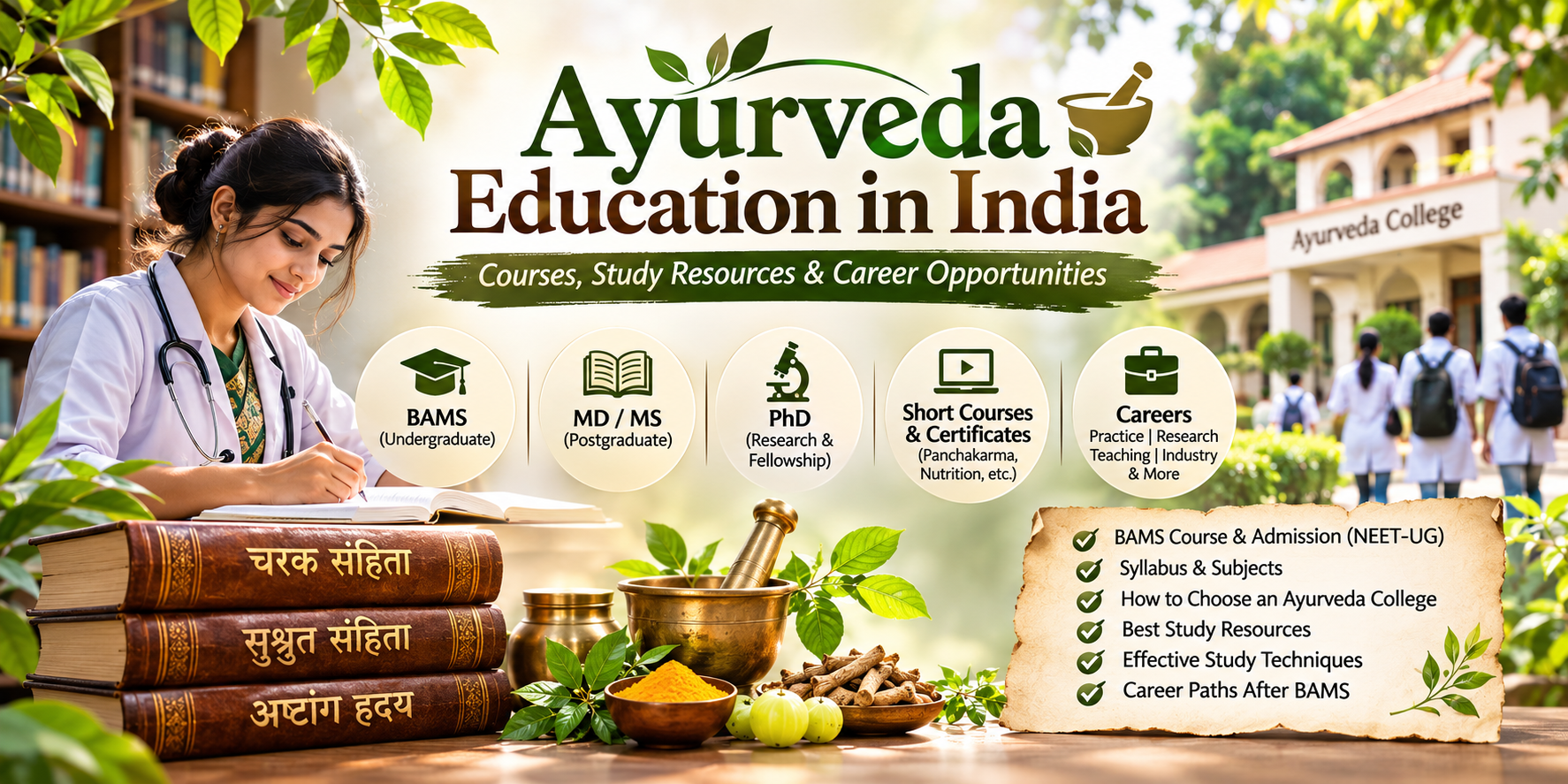
Planning to study Ayurveda? Learn how BAMS works, which courses and online learning options exist, how to study smarter, and what career paths open up after Ayurveda education.
Ayurveda is one of the oldest systems of healthcare, and it is also one of the most active fields of study in India today. Every year, thousands of students enter Ayurveda colleges, and many more working professionals look for workshops, short courses and online programmes to deepen their knowledge.
If you are a student, an aspiring Vaidya or someone planning a career in Ayurveda, the first question is usually the same: where do I start, and what path should I follow?
This guide explains the main Ayurveda education pathways in India, how the BAMS degree is structured, which study resources are worth your time, how to prepare for exams, and what careers are open after you qualify.
Why Study Ayurveda Today?
Interest in Ayurveda is growing among patients, wellness seekers and healthcare professionals in India and abroad. This creates demand for well-trained practitioners, researchers, educators, product specialists and clinic managers.
Studying Ayurveda gives you:
- A deep foundation in classical knowledge such as Charaka Samhita, Sushruta Samhita and Ashtanga Hridaya
- Clinical training in diagnosis, treatment planning and Panchakarma
- Knowledge of medicinal plants, formulations and pharmaceutics
- Career options in clinical practice, research, teaching, manufacturing and healthcare technology
Ayurveda Education Pathways at a Glance
- Undergraduate: BAMS (Bachelor of Ayurvedic Medicine and Surgery)
- Postgraduate: MD or MS (Ayurveda) in specialities such as Kayachikitsa, Panchakarma, Shalya Tantra, Shalakya Tantra, Dravyaguna and Rasashastra
- Doctoral and research: PhD, fellowships and research programmes
- Short courses and certificates: Panchakarma technician courses, Ayurvedic nutrition, Ayurvedic cosmetology and similar programmes
- Continuing education: Workshops, CME programmes, webinars and online learning for practising Vaidyas
The right path depends on whether you want to treat patients, teach, do research or work in the wider Ayurveda industry.
Understanding the BAMS Degree
BAMS is the main undergraduate qualification for becoming an Ayurvedic doctor in India. The course is generally structured as four and a half years of academic study followed by a one-year compulsory rotating internship, so about five and a half years in total.
Admission: Admission to BAMS is generally through NEET-UG followed by counselling, either through the all-India quota or state counselling. Always confirm the current eligibility rules and counselling process on official government sources before applying.
What you study: The curriculum combines classical Ayurveda with modern medical sciences. Subjects may differ slightly based on the curriculum issued by the National Commission for Indian System of Medicine (NCISM), but the journey usually looks like this:
- First professional year: Foundation subjects such as Padartha Vigyan, Samskrit, Kriya Sharir, Rachana Sharir and the history of Ayurveda
- Second professional year: Dravyaguna, Rasashastra and Bhaishajya Kalpana, Roga Nidana and Vikriti Vigyan, and classical texts
- Third professional year: Clinical subjects such as Kayachikitsa, Panchakarma, Shalya, Shalakya, Prasuti and Stri Roga, Kaumarbhritya, Agada Tantra and public health
- Internship: Hands-on training in hospitals and clinics, where you apply what you have learned with real patients
How to Choose an Ayurveda College
Not every college offers the same learning experience. Before you decide, check:
- Recognition: The college should be approved and recognised by the relevant national regulator
- Clinical exposure: A teaching hospital with a healthy patient flow matters more than a long list of facilities
- Faculty: Experienced teachers and practising Vaidyas who mentor students
- Pharmacy and herbal garden: Hands-on exposure to medicines and dravya identification
- Research and library: Access to journals, classical texts and research projects
- Results and alumni: Where graduates go after the degree
Visiting the campus, speaking with current students and asking about internship quality will tell you more than a brochure.
Best Study Resources for Ayurveda Students
Classical texts: The foundation of Ayurveda education is the study of the Brihat Trayi (Charaka Samhita, Sushruta Samhita, Ashtanga Hridaya) along with texts such as Madhava Nidana, Bhavaprakasha and Sharngadhara Samhita. Study them with a good translation and commentary, and discuss difficult passages with your teachers.
Textbooks and reference books: Use the textbooks recommended by your university for each subject, and add one reliable reference book for subjects you find difficult.
Journals and research papers: Reading published Ayurveda research builds your understanding of evidence, case reporting and research methods. Start with open-access journals from recognised institutions.
Case studies: Learning from real cases is one of the fastest ways to connect theory with practice. Ask your seniors and mentors to share and explain their cases.
Online learning: Webinars, recorded lectures and online courses from recognised institutions and experienced Vaidyas can complement classroom learning, especially for revision and for topics your college covers briefly.
Study Techniques That Work for Ayurveda
Ayurveda has a large body of Sanskrit shlokas, concepts and clinical applications. These techniques help students manage it:
- Learn shlokas in small daily portions. Ten minutes every day beats a long cramming session before exams.
- Understand before you memorise. Ask what a shloka means in practice, and link it to a disease, a medicine or a therapy.
- Create concept maps. For topics like Dosha, Dhatu, Mala or Srotas, draw connections instead of writing long lists.
- Use flashcards for formulations. Note the ingredients, the dosage form, the indication and the reference text.
- Revise in cycles. Revise after one day, one week and one month.
- Practise answer writing. Write short notes and long answers within the time limit.
- Study in groups. Explaining a topic to a friend is one of the best ways to test your own understanding.
- Connect theory with the clinic. During postings, relate every case to what you studied in class.
Preparing for Ayurveda Exams
University exams: Follow the syllabus and the previous years' question patterns. Give equal attention to theory, practical and viva, because many students lose marks in practicals and oral exams.
NEET-UG: If you are still planning to enter BAMS, focus on Physics, Chemistry and Biology, and check the latest exam pattern and dates on the official website of the conducting agency.
Postgraduate entrance: For MD or MS (Ayurveda) admission, students generally appear for the All India AYUSH Post Graduate Entrance Test (AIAPGET). Check the official notice each year for the syllabus, eligibility and dates.
A simple preparation plan: finish the syllabus first, revise in cycles, then spend the final weeks on mock tests and weak areas.
Workshops and Continuing Education for Practising Vaidyas
Learning does not stop after the degree. Practising Vaidyas benefit from:
- Panchakarma and therapy workshops
- Clinical case discussion sessions
- Seminars and conferences by Ayurveda institutions
- Training in documentation and patient records
- Courses on research methodology
- Programmes on clinic management and digital tools
Continuing education keeps your clinical practice current and helps you build confidence and credibility with patients.
Career Opportunities After Ayurveda Education
A BAMS degree opens more doors than many students realise.
- Clinical practice: Run your own clinic, join a hospital or work in a Panchakarma or wellness centre
- Government service: Roles in AYUSH hospitals, dispensaries and public health programmes
- Teaching: Join an Ayurveda college as a faculty member after postgraduate qualification
- Research: Work in clinical research, drug standardisation or Ayurveda research institutions
- Pharmaceutical industry: Roles in product development, quality control and regulatory affairs
- Wellness and tourism: Ayurveda resorts, retreats and international wellness centres
- Healthcare technology: Ayurveda content, clinical documentation and digital health platforms
- Entrepreneurship: Start a clinic, a herbal product brand or an education platform
Skills Every Modern Ayurveda Student Should Build
Clinical knowledge is the base, but these skills help you grow faster:
- Patient communication and counselling
- Case documentation and record keeping
- Basic understanding of modern diagnostics and when to refer
- Research reading and evidence awareness
- Practice management, including appointments, billing and follow-ups
- Comfort with digital tools
Students who learn these skills early are usually better prepared when they start their own clinics.
The Value of Mentorship and Community
Books teach theory, but experienced Vaidyas teach judgement. A good mentor can show you how to take a history, choose a treatment plan, handle difficult cases and build trust with patients.
If you can, shadow a practising Vaidya during holidays, attend local Ayurveda events and join student and practitioner communities. These connections often lead to internships, job opportunities and lifelong learning partners.
Common Mistakes Students Make
- Studying only for marks and ignoring clinical learning
- Skipping classical texts and relying only on notes
- Leaving practical and viva preparation for the last week
- Not building any professional network until after graduation
- Ignoring practice management skills
- Taking up courses without checking recognition and credibility
Frequently Asked Questions
What is BAMS? BAMS stands for Bachelor of Ayurvedic Medicine and Surgery. It is the undergraduate degree for becoming an Ayurvedic doctor in India.
How long is the BAMS course? It is generally four and a half years of study plus a one-year internship. Confirm the current structure with NCISM.
Which exam is required for BAMS admission? Admission is generally through NEET-UG and counselling. Check the latest rules on official sources.
What can I do after BAMS? You can practise, pursue MD or MS in Ayurveda, enter government service, teach, do research, work in the pharmaceutical industry or start your own venture.
Are online Ayurveda courses useful? Yes, when they come from recognised institutions or experienced Vaidyas. Online courses are best used alongside formal education rather than as a replacement for clinical training.
How can I study Ayurveda effectively? Study shlokas daily in small portions, understand concepts rather than memorising blindly, revise in cycles and connect every topic with clinical cases.
Conclusion
Ayurveda education combines classical wisdom, clinical training and modern scientific understanding. Whether you are preparing for BAMS, studying for postgraduate entrance or planning your career after graduation, steady learning and good mentorship will take you further than shortcuts.
Choose a recognised college, study the classical texts with care, build clinical skills, keep learning through workshops and online resources, and stay connected with the wider Ayurveda community.
What you learn today will shape the care you give your patients tomorrow.