
Ayurveda Diagnostics: Understanding Nadi Pariksha, Prakriti, Vikriti and Modern Diagnostic Support
VaidyaMitra Team
03-11-2026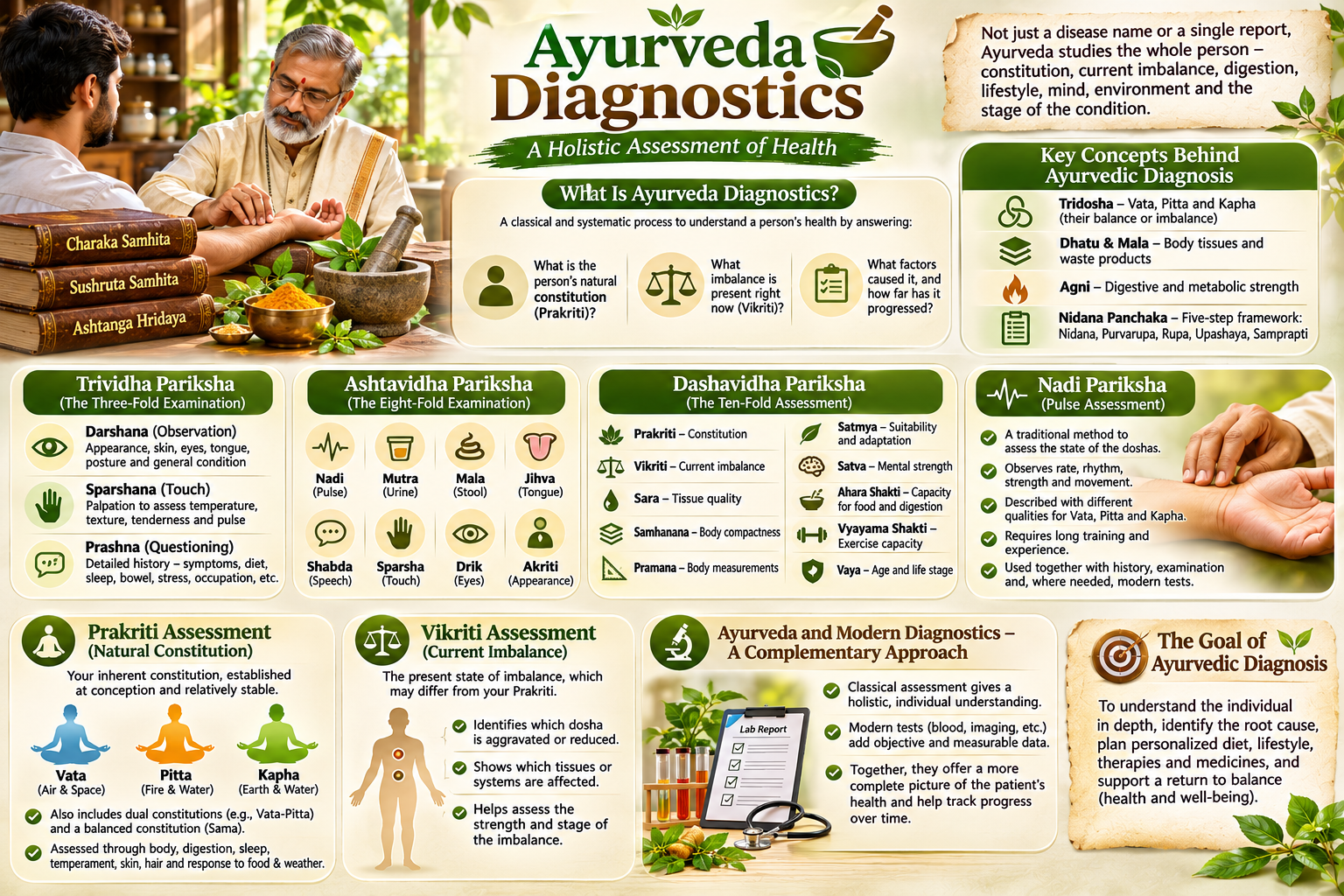
Explore how Ayurvedic diagnosis works, from Nadi Pariksha and Prakriti assessment to Vikriti evaluation, and how traditional methods can work alongside modern laboratory diagnostics for better patient assessment.
Ayurveda approaches diagnosis very differently from a purely test-driven model. Instead of looking only at a disease name or a single report, a Vaidya studies the whole person: body constitution, current imbalance, digestion, lifestyle, mind, environment and the stage of the condition.
Today, many Vaidyas combine this classical assessment with modern diagnostic reports and digital records. This helps them see a fuller picture of the patient and track progress over time.
This article explains the core concepts of Ayurveda diagnostics, including Nadi Pariksha, Prakriti and Vikriti assessment, classical examination methods, and how Ayurveda and modern diagnostics can support each other.
What Is Ayurveda Diagnostics?
Ayurveda diagnostics is the structured process of understanding a patient’s health condition using classical Ayurvedic principles. It focuses on three questions:
What is the person’s natural constitution?
What imbalance is present right now?
What factors contributed to it, and how far has it progressed?
The answers guide the Vaidya in planning diet, lifestyle advice, therapies, medicines and follow-up.
Ayurvedic diagnosis is individual. Two patients with the same complaint may be assessed and advised differently because their constitution, digestion, lifestyle and stage of imbalance can differ.
Key Concepts Behind Ayurvedic Diagnosis
Classical Ayurveda describes several frameworks used in patient assessment.
Tridosha: Vata, Pitta and Kapha are the three fundamental regulating principles. Their balance or imbalance is central to Ayurvedic assessment.
Dhatu and Mala: The tissues of the body (Dhatu) and the waste products (Mala) are observed to understand the state of the body.
Agni: The strength of digestion and metabolism is considered closely connected to overall health.
Nidana Panchaka: A five-part framework for understanding disease: Nidana (causative factors), Purvarupa (early signs), Rupa (symptoms), Upashaya (what relieves or aggravates) and Samprapti (the progression of the condition).
Trividha Pariksha: The Three-Fold Examination
A classical method of examination includes three approaches:
Darshana (observation): The Vaidya observes the patient’s appearance, skin, eyes, tongue, posture and general condition.
Sparshana (touch): Palpation and touch help assess temperature, texture, tenderness and pulse.
Prashna (questioning): Detailed questions about symptoms, diet, sleep, bowel and urinary habits, stress, occupation, family history and daily routine.
A good consultation depends heavily on careful questioning and patient history, which is why accurate record keeping is so valuable.
Ashtavidha Pariksha: The Eight-Fold Examination
Ayurveda also describes an eight-fold clinical examination (Ashtasthana Pariksha), commonly listed as:
Nadi (pulse)
Mutra (urine)
Mala (stool)
Jihva (tongue)
Shabda (speech and sounds)
Sparsha (touch)
Drik (eyes)
Akriti (general appearance)
These observations help the Vaidya build a broader clinical impression of the patient.
Nadi Pariksha: Pulse Assessment in Ayurveda
Nadi Pariksha is one of the best known Ayurvedic diagnostic methods. The Vaidya examines the pulse, usually at the wrist, and observes qualities such as rate, rhythm, strength and movement.
In Ayurvedic tradition, the pulse is read as an indicator of the state of the doshas and the overall condition of the body. For example, Vata-dominant, Pitta-dominant and Kapha-dominant pulse patterns are traditionally described through different qualities of movement.
Nadi Pariksha requires years of training, practice and experience. It is best understood as one part of a complete clinical assessment, used together with history taking, examination and, where needed, modern investigations.
Prakriti Assessment: Understanding Your Natural Constitution
Prakriti refers to an individual’s inherent constitution, which is traditionally considered to be established at conception and to remain relatively stable through life.
Prakriti is often described as:
Vata-predominant
Pitta-predominant
Kapha-predominant
Dual constitution (such as Vata-Pitta or Pitta-Kapha)
Balanced constitution (Sama)
A Prakriti assessment typically considers physical build, digestion, appetite, sleep pattern, temperament, energy levels, skin and hair characteristics, and response to weather and food.
Why it matters: Knowing a patient’s Prakriti helps a Vaidya personalize diet, lifestyle, seasonal routines and treatment planning. It also helps explain why a person may be prone to certain types of imbalance.
Vikriti Assessment: Identifying the Current Imbalance
While Prakriti describes the natural baseline, Vikriti describes the present state of imbalance.
A person’s Vikriti may differ from their Prakriti because of diet, stress, seasonal change, irregular routine, sleep disturbance, illness or other factors. Assessing Vikriti helps the Vaidya identify which dosha is aggravated or reduced, which tissues or systems are affected, and how strong the imbalance is.
Prakriti and Vikriti together: Comparing the two gives a more complete picture. Prakriti shows what is natural for the person, and Vikriti shows what has shifted. Treatment planning generally aims to support movement back toward balance.
Dashavidha Pariksha: The Ten-Fold Patient Assessment
Classical texts also describe a ten-fold assessment of the patient, which considers factors such as:
Prakriti (constitution)
Vikriti (imbalance)
Sara (tissue quality)
Samhanana (body compactness)
Pramana (body measurements)
Satmya (suitability and adaptation)
Satva (mental strength)
Ahara Shakti (capacity for food and digestion)
Vyayama Shakti (exercise capacity)
Vaya (age)
This helps the Vaidya judge the patient’s overall strength and tolerance before deciding on the intensity of treatment, which is particularly relevant before therapies such as Panchakarma.
Laboratory Diagnostics in an Ayurvedic Practice
Many Ayurvedic practitioners today use laboratory investigations as supportive tools. Depending on the patient’s condition, these may include:
Blood tests
Blood sugar and lipid profile
Thyroid function tests
Liver and kidney function tests
Urine and stool examination
Imaging studies such as X-ray or ultrasound
Laboratory reports can provide objective measurements that help confirm, monitor or rule out certain conditions, and can support safer clinical decision making.
Ayurveda and Modern Diagnostics: A Complementary View
Ayurvedic assessment and modern diagnostics look at health from different angles.
Ayurvedic diagnosis emphasizes constitution, imbalance, digestion, lifestyle and the patient’s overall pattern. Modern diagnostics provide measurable, standardized data about specific parameters in the body.
Used responsibly, the two can complement each other. A Vaidya may use reports to monitor a patient’s progress, identify conditions that need urgent or specialist care, and support documentation and referral when required.
The Vaidya remains central to clinical judgment. Technology and laboratory data are there to support the decision, not to replace the practitioner’s training and experience.
Challenges in Ayurveda Diagnostic Documentation
Even when the clinical assessment is thorough, recording it can be difficult. Many clinics still face:
Handwritten notes that are hard to search later
Prakriti and Vikriti details that are not recorded in a structured way
Lab reports stored separately from consultation records
Difficulty comparing a patient’s findings across visits
Limited ability to review treatment response over time
This is where digital tools can make a practical difference.
How Digital Tools Can Support Ayurveda Diagnostics
A well-designed digital Ayurveda platform can help Vaidyas:
Record Prakriti and Vikriti assessments in a structured format
Maintain consultation history and clinical observations
Store lab reports alongside patient records
Compare findings across multiple visits
Plan therapies and follow-ups based on documented assessment
Share relevant records with the patient, with proper privacy and consent
The aim is not to turn Ayurveda into a checklist. It is to give Vaidyas an organized record of their own clinical assessment so they can spend more time with patients and less time searching through papers.
Patient Assessment: Putting It All Together
A complete patient assessment in an Ayurvedic clinic often follows this path:
Patient history and complaints →
Prakriti assessment →
Vikriti assessment →
Nadi Pariksha and clinical examination →
Review of laboratory or imaging reports where relevant →
Diagnosis and treatment plan →
Follow-up and progress review
Each step adds information. When all of it is recorded in one place, the Vaidya can see how the patient is responding and adjust the plan accordingly.
Important Note
Ayurvedic and diagnostic information in this article is shared for educational purposes only. It should not be used for self-diagnosis or to replace professional medical advice. Anyone with a health concern should consult a qualified Ayurvedic practitioner or medical professional.
Introducing Vaidya Mitra
Vaidya Mitra is envisioned as a digital Ayurveda ecosystem that brings Vaidyas, clinics, patients, students and other Ayurveda stakeholders together on one platform.
For diagnostics, this means structured patient records, consultation and treatment history, therapy scheduling, and a connected workflow where assessment findings and reports stay organized for every visit.
Conclusion
Ayurveda diagnostics is built on understanding the individual: their constitution, their present imbalance, their digestion, lifestyle and overall strength. Methods such as Nadi Pariksha, Prakriti and Vikriti assessment, Trividha Pariksha and Ashtavidha Pariksha give the Vaidya a structured way to look at the whole patient.
Modern laboratory diagnostics can add objective data, and digital records can help preserve and organize everything for future care.
Together, traditional wisdom and modern tools can help Vaidyas deliver more informed, organized and patient-centered care.
Are you a Vaidya, clinic or Ayurveda institution looking to organize patient assessments and treatment records digitally?
Discover how a connected Ayurveda ecosystem can bring your practice, patients and professional network together.