
Abhyanga, Shirodhara, Swedana and Rasayana Case Study Guide: Therapy Preparation, Procedure and Aftercare
VaidyaMitra Team
04-11-2026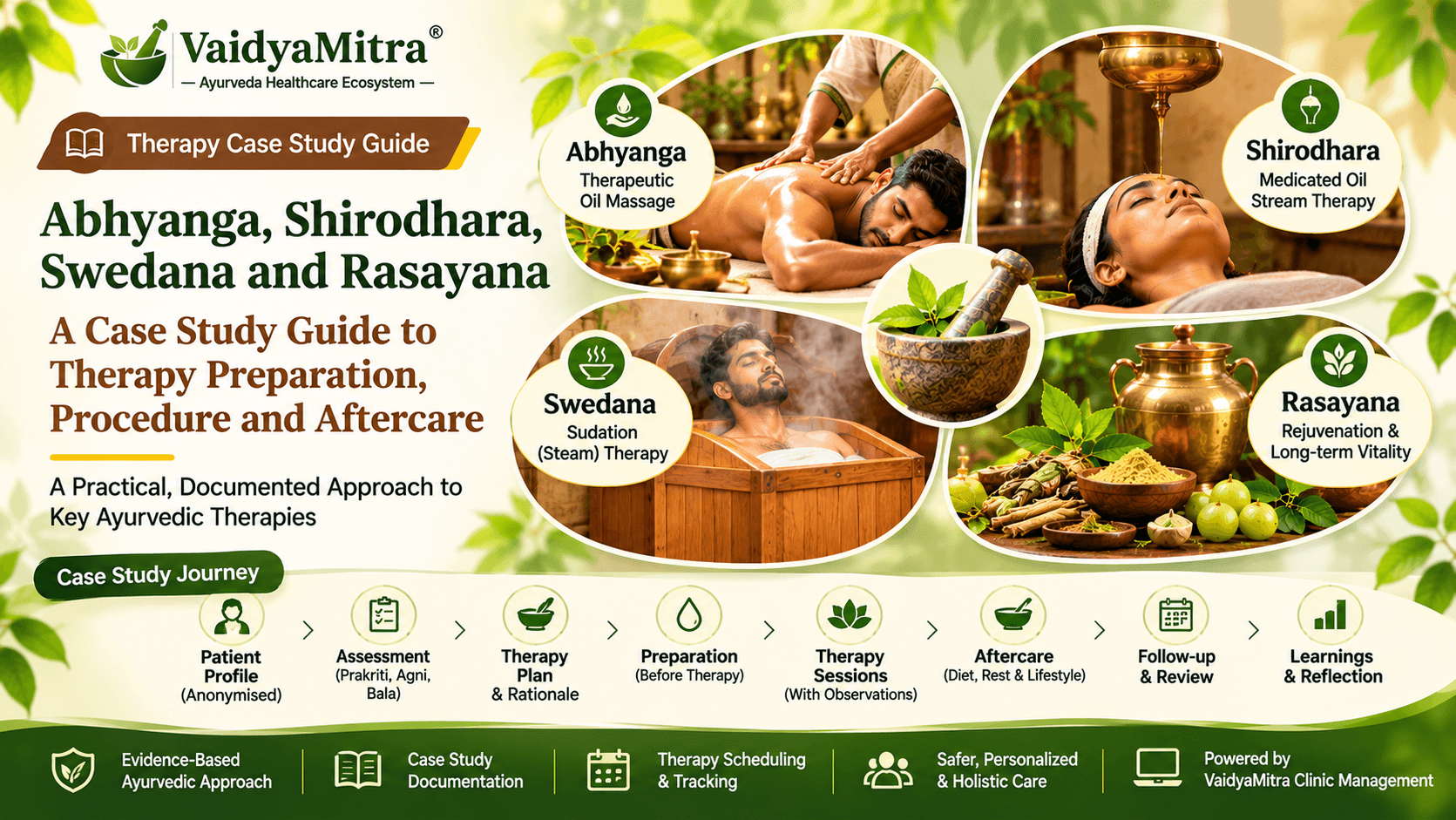
An educational case study guide to Abhyanga, Shirodhara, Swedana and Rasayana therapies, explaining how they are prepared, performed, documented and followed up in Ayurvedic practice.
Abhyanga, Shirodhara, Swedana and Rasayana Case Study Guide: Therapy Preparation, Procedure and Aftercare
Beyond the main Panchakarma procedures, Ayurveda uses many supportive, preparatory and rejuvenating therapies. Abhyanga, Shirodhara, Swedana and Rasayana are among the most well known. This guide explains each of them in a case study style, so students, Vaidyas and patients can understand how a therapy plan is designed and documented.
Note: The case study format below is an illustrative educational template. It is not a record of a real patient and not medical advice. Therapies should be chosen and performed only by a qualified Vaidya.
Understanding the Four Therapies
1. Abhyanga (Therapeutic Oil Massage)
Abhyanga is the application of medicated oil on the body with specific massage techniques. It is often used as part of Purvakarma (preparation) and as a standalone wellness therapy.
- Common documentation: oil used, duration, patient comfort, skin response.
2. Shirodhara
Shirodhara involves pouring a continuous stream of medicated oil or liquid over the forehead for a set duration. It is commonly associated with relaxation and is used in specific conditions as decided by the Vaidya.
- Common documentation: liquid used, duration, number of sessions, patient-reported experience.
3. Swedana (Sudation Therapy)
Swedana is therapeutic sweating, usually performed after Snehana (oleation). It is a key step in preparing the body for Panchakarma.
- Common documentation: type of Swedana, duration, observations during and after, and precautions followed.
4. Rasayana (Rejuvenation Therapy)
Rasayana refers to rejuvenation approaches that focus on long-term health, vitality and resilience. It includes specific formulations, diet and lifestyle guidance, and is selected based on age, condition and constitution.
- Common documentation: Rasayana type, duration, diet and lifestyle advice, and follow-up review.
Therapy Preparation: What Happens Before
Good preparation improves the quality of any therapy. A Vaidya typically:
- Takes a detailed history and examines the patient
- Assesses digestion, strength and constitution
- Checks for conditions where a therapy should be avoided
- Explains the procedure and expected experience to the patient
- Advises on food, rest and clothing before the session
Aftercare: What Happens After
Aftercare is as important as the therapy itself. Typical guidance includes:
- Rest and avoiding exposure to cold wind or extreme heat
- Light, easily digestible food as advised
- Adequate warm water and sleep
- Avoiding strenuous activity for the period advised
- Reporting any discomfort to the Vaidya
Illustrative Case Study Structure
- Patient profile (anonymised): Age group, gender, lifestyle.
- Main concern: For example, stress, poor sleep or general fatigue.
- Assessment: Prakriti, Agni, Bala and relevant observations.
- Therapy plan: Which therapies were chosen and why, with duration and schedule.
- Preparation: Steps taken before the first session.
- Sessions record: Observations after each session.
- Aftercare advice: Diet and lifestyle guidance given.
- Follow-up: Patient feedback and clinical review.
- Reflection: What worked, what did not, and what could be improved.
Tips for Documenting Therapy Sessions
- Record each session with date, therapy, duration and therapist name.
- Note the patient’s response honestly, including discomfort.
- Keep language factual and avoid exaggerated claims.
- Take consent before using any case for education or publication.
- Remove all personal identifiers.
Who Should Be Careful?
Pregnancy, fever, acute illness, certain skin or heart conditions and some medications can change whether a therapy is suitable. Always disclose your full health history to the Vaidya.
How Digital Tools Support Therapy Documentation
Therapy centres often handle multi-day schedules, several therapists and many patients. Digital tools can help track sessions, send reminders and keep treatment history organized, which also makes future case studies easier to prepare. Vaidya Mitra supports therapy scheduling and clinic management in one connected platform.
Explore our Ayurveda Case Studies and learn more about Clinic Management.
Conclusion
Abhyanga, Shirodhara, Swedana and Rasayana show how Ayurveda combines preparation, treatment and aftercare into one thoughtful journey. Clear, honest case documentation helps the whole community learn from clinical experience.
Ready to organize your therapy practice?
Discover how Vaidya Mitra can help you manage therapy schedules, patient records and professional learning.